Showing posts with label money math. Show all posts

Thursday, April 15, 2010

MAM Day 15: Death and Taxes

The late and great Benjamin Franklin said this great quote "...in this world nothing can be said to be certain, except death and taxes." April 15th is the deadline to file federal and state income taxes. I suppose I should've written this blog earlier in the month to send out any links or additional information, but as a tax procrastinator, I myself didn't file until Monday the 12th. Lucky for some of us, certain counties within Massachusetts have been granted an extension to file tax returns due to flooding.


Tax day stress relief & freebies for those of you who want a tax day pick me up.

Why do we have taxes at all?

Are income taxes illegal?

Death, taxes, or dentists?

Why is tax day April 15?

12 tax breaks


This year was the first year my dad asked me to file my own taxes. I guess that's how you know you're an adult (or trying to be). I tried another online tax preparation site, but when I got to the end, they wanted to charge me almost $90 to e-file my federal and state taxes. As an AmeriCorps volunteer, $90 is a chunk of money I didn't want to spend, so I found a different online tax service that was free. Normally, I don't enjoy product placement, but H & R Block's online tax filing system was quite easy for me to figure out and they were extremely helpful.

After going through my forms for the first tax site, H&R Block's form was a breeze. Unfortunately, I had some issues with my tax return and I had to review and correct it. After floundering and nearly giving up on all my taxes, I found my 2008 tax info and contacted H&R Block to figure out where to put my information. Within 20-30 minutes, a H&R Block rep chat with me and walked me through the steps. Great service no? I expect my tax return sometime soon so I can pay off my student loan payment...


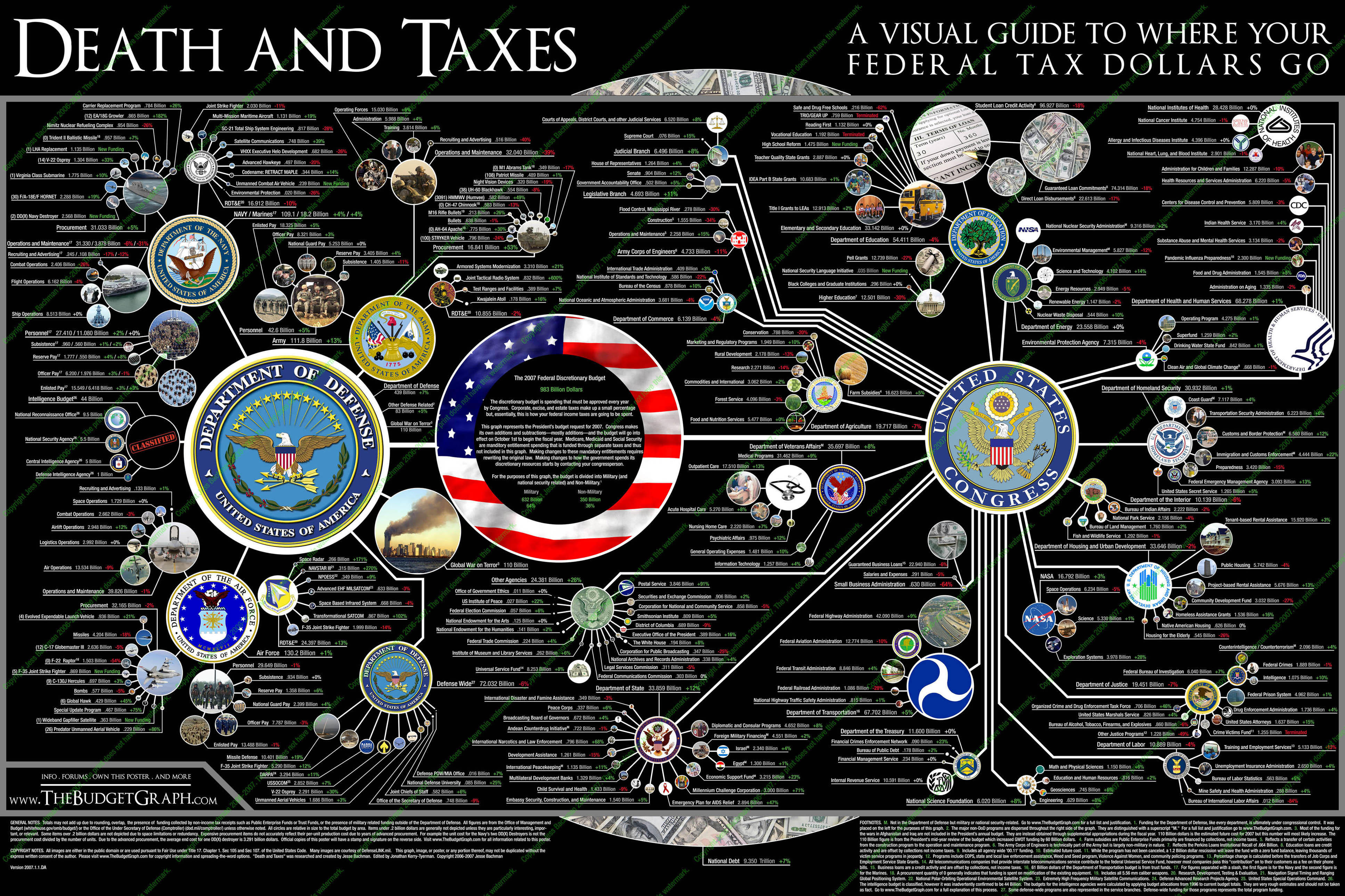
Finally, I found these amazing charts that show you where all the tax money goes - to the government. But how is it spent after getting to the government? These charts are super detailed and looking at the Department of Education budget from year to year is quite interesting. Original source: Mibi



.

Wednesday, April 14, 2010

MAM Day 14: Savings accounts & interest

Lets stop talking about spending money and buying things when I don't have money. The better idea is to not buy things, even if they're on sale, but I don't have that sort of self control.


Money doesn't grow on trees!

Today's math awareness is how to save money. How can we get the most out of a savings account? My experience with saving money is having a savings account that's separate from my checking account. However, I don't know what kind of interest I'm getting on that savings account. I have heard of better interest banks for savings accounts, but I don't know for sure.


This first exercise is balancing your checkbook and working out bills and your salary. Some older students might appreciate doing this exercise to understand how a paycheck can disappear so quickly.


This exercise starts going into savings accounts and how simple interest and compound interest work. This page has links to outside websites that explain other banking terms and finance terms.


A diagram of the difference

What's the difference between simple and compound interest? Well, this site sums it up quite well - "simple interest grows slowly, compounding speeds up the process." For those of you who understand math jargon, it's the difference between a linear growth and quadratic growth.

Simple interest is adding only more interest on the original amount you deposited. Compound interest is adding interest on the amount you currently have, this includes any new interest you may have accumulated.


Now, the other side of the coin is if you were to be in debt. Suppose you have some credit card debt, or student loan debts. More often than not, these debts accumulate compound interest, which means in the long run, you end up paying way more than you originally borrowed.


This article is one strategy for minimizing student debt


This cartoon sums up my relationship with my dad and our understanding of life, education and careers.


.

Tuesday, April 13, 2010

MAM Day 13: Sales and deals

Today's post is how to get the best deals when you see sales, discounts, reduced price items, etc. This is where math really comes in handy!


Some of the best shoppers have a good eye for quality clothes and quality deals. I discovered this when I was preparing my gala look in the week or so before our Gala. I got to shop with several different co-workers and got a feel for how people think when they're shopping. For example: how do you know if a buy one get one free deal is a better deal than 40% off a similar priced item?


Do some simple math! This type of math requires that you understand addition, subtraction, have an understanding of percentages and decimals, and finally to really understand the what the question is asking, or the math language that relates to the math problem. (If you need a refresher on percents and decimals)

Other sales and discount math practice


Other tips for mixing math with younger children. It might help keep your kids distracted and not continually asking "Can I buy this candy?" (which is what I ask all the time). Plus it'll help them later on in life when they have to do their own grocery shopping (scary but it's true, children grow up and have to buy their own groceries).


This cost me over 4 dollars?! I'm gonna buy off brand next time.

Finally, my mom used to emphasize the price per units when we went grocery shopping. She would make us divide the total price by the total units. For example, a 10 oz. box of cereal might run for 3 or 4 dollars. In comparison to a 20 oz. bag of off-brand cereal for $2.99, you're getting a much better deal. How do you know if you're getting the best deal? If there's a 16 oz. bag of cereal for $2.50 or the 20 oz. bag for $2.99 which one would you buy? Which one is the better deal?

Luckily for us, grocery stores now list the unit price on most of their items. If you look closely, they have a price per pound, or price per package and you can compare just by looking. I will say that my mom prepared us well when we had to figure these things out by ourselves. Check the grocery store tags to compare different brands, you could save a lot of money!


.

Monday, April 12, 2010

MAM Day 12: Money and change

It only took 12 days for me to talk about one of the most obvious examples of daily math! The next few days will be related to money and how we deal with it every day or almost every day.


Paying for goods, food, and services is a regular occurence. I would guess that everyone has to use money in one way or another daily, and if not daily weekly. We need money to survive, to make a living, to support ourselves and the people we care for.

How did we learn the language of money and currency? The American money units are easy enough, pennies, nickels, dimes, quarters, and the dollar denominations. Younger children learn how to identify and associate certain coins with monetary values. As we continue to work with money, we learn how to hand over enough money to cover a lunch that costs $6.34. How do we know when we get the right change from a $10 bill? Simple math!


The majority of money math involves the basic math calculations, addition, subtraction, multiplication, division, and understanding decimals & percents. That's it! Easy enough, most students have a good sense of money math by middle school if not earlier.

I searched for a site on minting money and enjoyed the fun facts. Did you know that: "Thomas Jefferson liked to count by tens. Thomas Jefferson, honored on the current U.S. nickel, was the first person to back the use of the decimal money system that we use today." A few months back I watched a TV program on how they produce money and how money circulates through the economy. I also learned that a numismatist enjoy collecting coins.


Some of my favorite quarter designs for obvious reasons

Check back the rest of this week when I discuss other money related math including sales and discounts, savings accounts, and taxes!


.

Wednesday, February 3, 2010

Money subtraction

Working with money and math has always been a fairly easy thing for me, just because it's so concrete, it makes sense in the real world, and everyone has had to deal with it in one way or another (unfortunately). I wanted to help my students be able to easily compute money math because it matters in the real world (as opposed to abstract uses of Calculus in the real world).


The class was working on word problems involving subtraction and money and I got to help with a worksheet the kids were working on. Somehow, a few extra students wanted to join the table, so I ended up with five youngsters to help.

Though the extra peer support was somewhat necessary, it got a little crowded at the table, and one of my students asked if he could move to a different place with his math buddy. It really showed initiative and independence which was great. They worked together and when I checked up on them, they said they had finished the front of the worksheet and needed some help on the back.

The example questions the class worked on together invovled multi-part questions such as: "David got $37 from his mother for his birthday and had saved up $48 from his allowance. He wants to buy a $100 video game, how much more money does he need to save?"

While the class could articulate that you add what he already has ($37 + $48 = $85) then subtract it from his goal ($100 - $85 = $15), the worksheet problem was more difficult for my students yesterday. I'm not sure if it was the math problem itself that was distracting them or if the extra students were, but two of my students weren't listening as intentently as I had hoped. I even asked my independent student to explain his reasoning to the others, but they weren't paying attention. I felt sorry for him because he explained it really well.

Dividing your attention between several students is sometimes harder than usual and yesterday was one of those times. I think I'll try to only work with my students next week to give them more personal attention and to keep distracting students out of the group.